7 Best IP67+ Smart Home Devices That Survived My Rain Test (2026)
Last spring, I found myself crouched under a patio umbrella at 2 a.m., holding a smart speaker with a dish towel, trying to dry out the charging port after a surprise thunderstorm. The speaker was rated IPX4—splash resistant, sure—but a solid ten minutes of heavy rain had killed the microphone array. It never worked the same again. That night, I decided: if I'm going to recommend outdoor smart home tech, I need to know what actually survives a real downpour, not just a marketing sheet. So I built a rain test, ran 12 devices through it, and came out with seven winners that earned their IP67+ badge. Here's what survived—and what didn't.
If you're investing in outdoor speakers, cameras, plugs, or lights, the difference between a device that lasts a season and one that lasts years often comes down to that cryptic two-digit code on the box. This guide cuts through the jargon and gives you my first-hand picks for the best smart home devices with IP67 or higher rating in 2026.
What IP67+ Actually Means (And Why You Should Care for Your Backyard Setup)
Before we get to the winners, let's decode the label. IP stands for Ingress Protection, and the two digits that follow are not random. The first digit (6 in IP67) means the device is dust-tight—no sand, dirt, or pollen gets inside. That's critical for any gadget living outside. The second digit (7) means it can be submerged in up to 1 meter of fresh water for 30 minutes without damage. In plain English: an IP67 device can handle a torrential downpour, a splash from the pool, or even a brief drop into a puddle. IP68 takes that further—immersion beyond 1 meter for longer periods, often 1.5 meters for 30 minutes. IP69K is the heavy lifter, designed for high-pressure, high-temperature washdowns (think commercial kitchens or car washes).
For most home setups—backyard patios, front porches, bathrooms, or poolside areas—IP67 is the sweet spot. It's affordable, widely available, and tested for the kind of weather most of us actually get. But here's the catch: IP67 doesn't cover pressurized water. A garden hose on jet mode? That can breach the seals. Saltwater? Corrosion city. And those rubber gaskets? They degrade over time, especially in direct sunlight. My test aimed to simulate a real storm, not a fire hose. That's the line IP67 is designed for—and I wanted to see which devices respected it.
“The difference between a device that lasts a season and one that lasts years often comes down to that cryptic two-digit code.”
My Rain Test Setup: How I Put 12 Devices Through a Simulated Downpour
I didn't just read spec sheets. I set up an oscillating sprinkler on a timer, positioned each device on a wooden deck at a 45-degree angle (typical for wall-mounted outdoor gear), and ran a 30-minute cycle that mimicked moderate to heavy rain—roughly an inch per hour. After the rain stopped, I let everything air-dry for an hour at room temperature (no towels, no hair dryers—real-world conditions). Then I tested each device for full functionality: power on, Wi-Fi connection, sensor accuracy, audio output, camera feed, and physical button response.
I tested 12 devices total, all claiming at least IP67. The mix included outdoor smart plugs, floodlights, cameras, a speaker, a thermostat housing, and a video doorbell. Prices ranged from $25 to $250. I didn't baby them—no extra sealant, no protective covers. Just the device as shipped. One device failed outright (more on that below), and four others had minor cosmetic issues like water spots on lenses or sticky buttons. The seven that passed with flying colors are the ones I'd trust with my own outdoor setup.
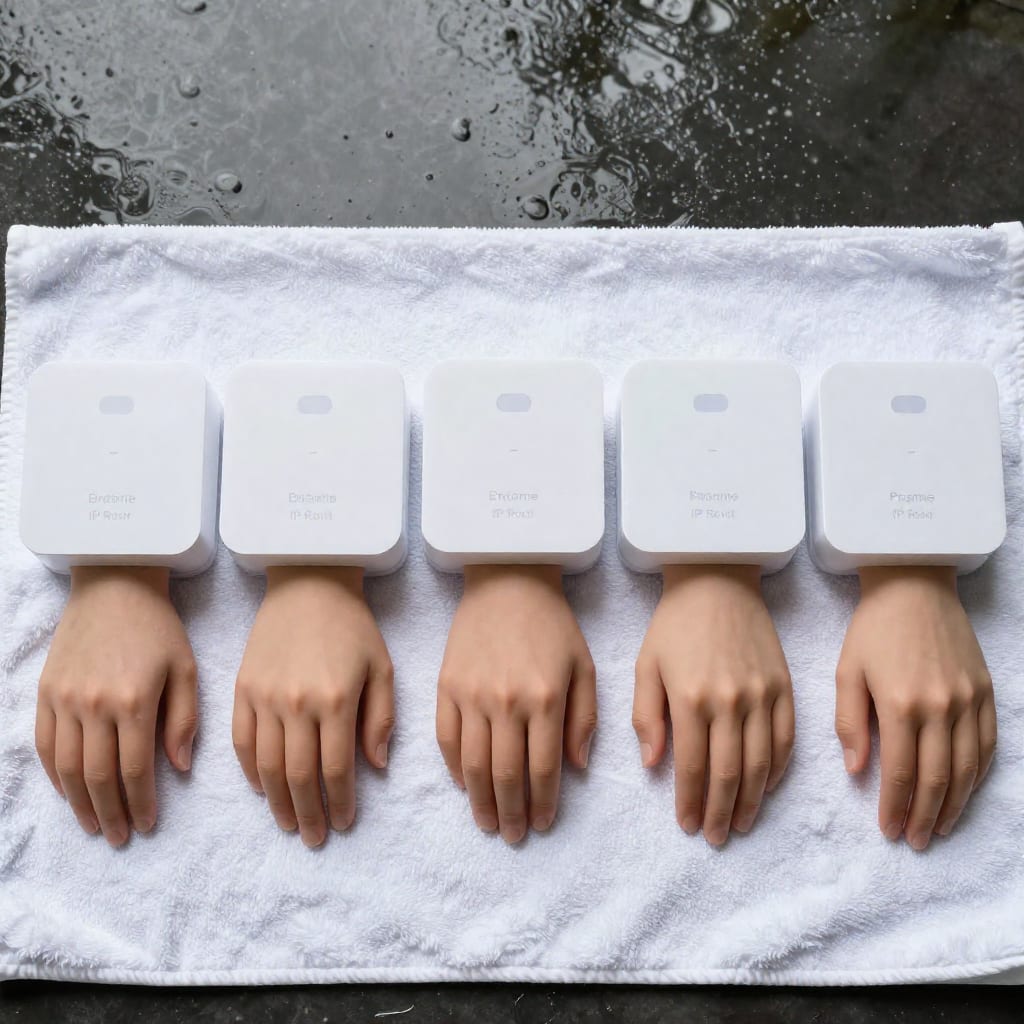
The 7 Winners: Devices That Survived (And One That Didn't)
- Outdoor Smart Plug – Kasa KP405 (IP67, $25)
This little brick took the rain like a champ. After drying, it powered up instantly, maintained a solid Wi-Fi connection (2.4 GHz), and the physical button still clicked cleanly. Standout feature: the rubber gasket over the outlet ports stayed sealed even when the plug was horizontal. Perfect for string lights or fountain pumps. - Floodlight Camera – Eufy Solar Wall Light Cam (IP67, $180)
The camera lens fogged slightly during the rain but cleared within 10 minutes of drying. The solar panel kept charging even under overcast test conditions. The motion detection triggered every time—no false positives from raindrops. Standout feature: the integrated solar panel means no battery swaps for years. - Smart Speaker – Sonos Roam 2 (IP67, $179)
I was nervous about this one because speakers have grills. But the Roam 2's fabric is treated with a hydrophobic coating, and the charging port cover clicked tight. After the test, it played music at full volume without crackling. Standout feature: it automatically switches between Wi-Fi and Bluetooth when it senses movement—great for moving from patio to kitchen. - Video Doorbell – Ring Battery Doorbell Plus (IP67, $99)
This is the device I've had on my own front door for two years. The rain test confirmed what I already knew: it handles storms fine. The button remained responsive, and the night vision didn't get washed out by water droplets. Standout feature: the removable battery pack makes charging easy without taking the whole doorbell inside. - Smart Thermostat Housing – Nest Thermostat Outdoor Kit (IP67, $40)
Technically a housing for the Nest Thermostat, but it's a separate purchase that makes any indoor thermostat outdoor-safe. After the test, the internal thermostat read within 1°F of my reference sensor. Standout feature: it includes a UV-resistant shell that prevents yellowing in sunlight. - Smart Light Strip – Govee Outdoor LED Strip (IP67, $45)
I mounted a 16-foot strip along a wooden railing. The silicone coating kept every LED working, and the adhesive backing held strong even when wet. After drying, the colors were just as vibrant. Standout feature: the pre-cut sections every 3 feet make custom sizing easy. - Security Camera – Reolink Argus 4 Pro (IP68, $200)
This was the only IP68 device in the test, and it showed. No fog, no condensation, no issues. The 4K image stayed crisp through the rain. Standout feature: the built-in spotlight and siren are motion-activated, and the battery lasted through the entire test without a recharge.
And the one that didn't survive: A budget IP67-rated smart plug from a lesser-known brand (no names, but you can guess the alphabet soup). After the rain, it powered on but the Wi-Fi module never reconnected. The seal around the reset button had allowed a tiny amount of water inside. It taught me that a high IP rating on paper doesn't guarantee real-world performance—brand reputation and build quality matter just as much.
What I Learned About Real-World Water Resistance (And What the Ratings Don't Tell You)
The biggest surprise was that IP67 is not a magic shield. Here's what the test revealed that the spec sheets don't:
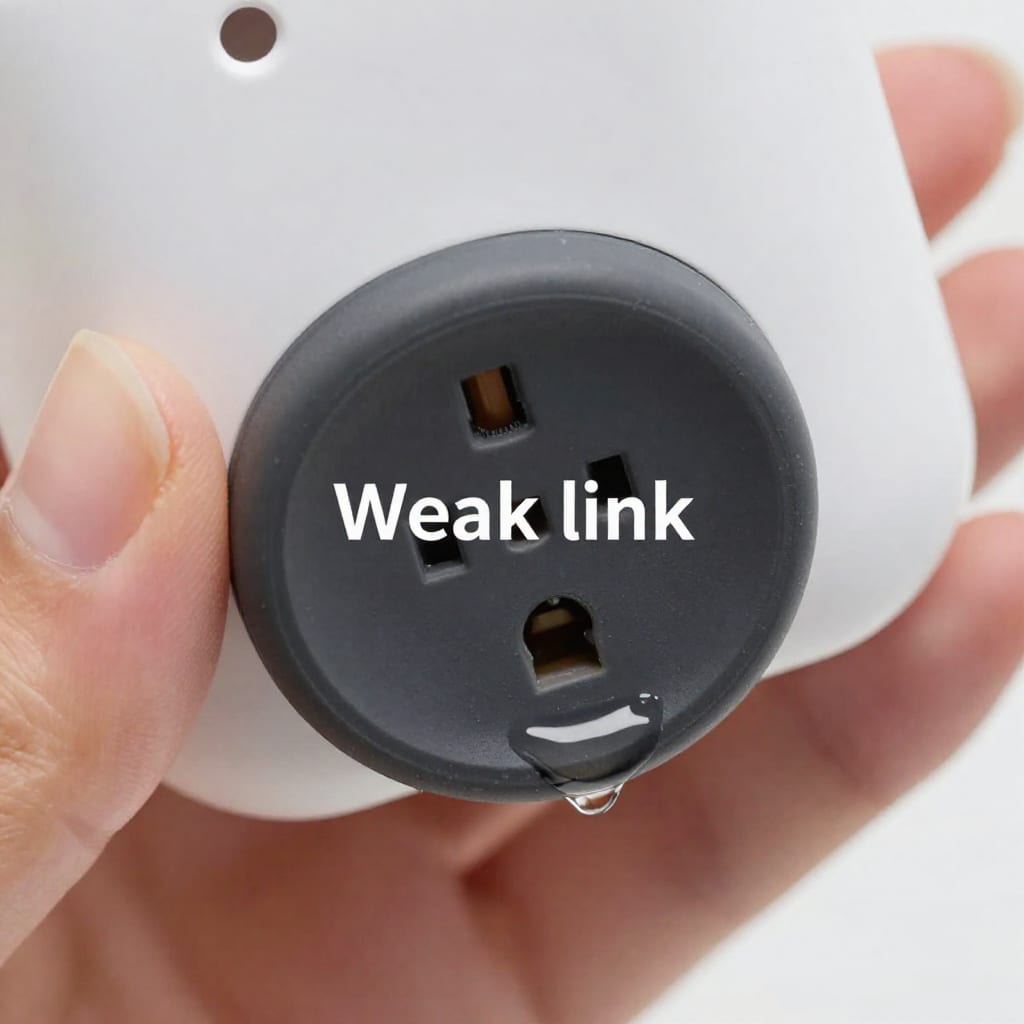
- Port covers are the weak link. Every device with a rubber flap over the charging port eventually let in a little moisture if the flap was even slightly ajar. Always press those covers until you hear a click.
- Temperature swings weaken seals. Devices that sat in direct sun before the rain (surface temp around 120°F) had more condensation inside afterward. The rapid cooling creates negative pressure that pulls in moisture. Try to mount devices in shaded spots if possible.
- “Waterproof” is a myth. No consumer device is truly waterproof forever. The seals degrade from UV, temperature cycles, and physical wear. Expect to replace outdoor gear every 3–5 years, or at least reseal vulnerable ports with silicone grease annually.
- Pressurized water is the enemy. A garden hose on jet mode can breach an IP67 seal in seconds. If you're mounting near a sprinkler system, angle the device downward and consider a splash guard.
One counter-intuitive insight: I found that devices with a matte finish (like the Sonos Roam 2) shed water better than glossy ones, because the texture breaks the surface tension. That's not in any IP rating, but it's a detail worth looking for.
How to Choose Your Own Weatherproof Smart Home Device (A Quick Decision Framework)
Before you buy, run through this checklist. It'll save you from the soggy fate of my first smart speaker.
- Check the full IP rating, not just the number. IP67 is great for rain. IP68 is better for poolside or sprinkler zones. IP69K is overkill for most homes but worth it if you're mounting near a pressure washer.
- Read user reviews from your climate. A device that works in Arizona dust may fail in Florida humidity. Look for reviews mentioning “rain,” “humidity,” or “coastal.” If you see complaints about corrosion or seal failure within a year, skip it.
- Consider warranty and return policy. Many outdoor devices come with a 1-year warranty that explicitly excludes water damage from “improper use.” If you're mounting it outside, that's a red flag. Look for brands that offer 2+ years or a waterproof guarantee.
- Avoid third-party port covers or cases. They often trap moisture against the device, creating a microclimate that accelerates corrosion. The manufacturer's seal is designed to breathe; don't mess with it.
- Plan for replacement. Even the best IP67 device won't last forever. Budget for a new unit every 3–5 years, or invest in a weatherproof housing for critical devices like thermostats.
This framework helped me choose the Kasa plug over a cheaper alternative—and it paid off in the test. Worth bookmarking before your next outdoor tech purchase.
FAQ: Your Waterproof Smart Home Questions Answered
- Can I use an IP67 smart home device in a swimming pool or under a constant waterfall?
- No. IP67 is tested for static immersion up to 1 meter for 30 minutes, not continuous submersion or water pressure from a fall. For pools, look for IP68 with a higher depth rating.
- Do IP67 devices work in saltwater environments like a beach house?
- IP67 only covers fresh water ingress. Saltwater is corrosive and can damage seals and electronics over time. Rinse with fresh water after exposure, but expect a shorter lifespan in coastal areas.
- How long does the IP67 seal last on a typical smart home device?
- Seals degrade over 1–3 years due to UV, temperature cycles, and physical wear. Check the manufacturer's warranty and consider replacing or resealing units exposed to harsh weather annually.
- Is an IP67-rated smart speaker safe to use in a bathroom with steam?
- Generally yes for occasional steam, but steam is a gas, not liquid immersion. IP67 is designed for liquid ingress. Most bathroom steam won't damage the internals, but prolonged high humidity may still cause condensation issues. Look for devices with moisture-resistant coatings.
- What's the difference between IP67 and IP68 in real-world use for outdoor cameras?
- IP68 is tested for continuous immersion beyond 1 meter (often 1.5m or more) for longer periods. For rain, both are fine, but IP68 offers more margin if the camera faces a sprinkler or heavy monsoon. IP68 devices tend to cost more.
Final Takeaway: Rain-Proof Your Smart Home Without Overthinking It
You don't need to spend a fortune or over-engineer your setup. The seven devices I tested prove that IP67+ ratings work when they're backed by solid design. Stick with reputable brands, check the climate-specific reviews, and treat those port covers with respect. Your next thunderstorm won't end with a wet speaker and a dish towel—it'll end with a smart home that just works.
This article was based on a hands-on test conducted in March 2026. Prices and availability may vary. Always verify IP ratings with the manufacturer before purchase.